A Canadian path to directed-energy counter-drone defence.
Laserverse Defence, a division of Laserverse, is bringing compact directed-energy counter-drone capability to Canada. With Fergus Engineering of Belgium, we are testing and validating its 3 kW LARX laser effector, hardening it for Canadian climates, and scaling production with Canadian partners.
The threatSmall, low-cost drones used in large numbers
The approachA compact laser layer within a wider counter-UAS system
The objectiveLonger range, cold-climate hardening, made in Canada
01 · THE THREAT
Small drones have changed the air-defence problem.
Large-area dazzle. A drone camera’s view of the scene is washed out by LARX.
Small unmanned aircraft systems (UAS), including commercial quadcopters, first-person-view (FPV) drones and modified hobby aircraft, are inexpensive, widely available and increasingly used for surveillance and attack. They can be difficult to detect, can be launched in numbers, and can threaten personnel, vehicles, installations and critical infrastructure.
Established countermeasures such as guns, interceptors and electronic warfare remain essential. However, they are not always well suited to large numbers of small, low-cost targets, or to use near populated areas and civilian infrastructure. Defenders are therefore looking for additional layers.
MilitaryBases, airfields, naval facilities and deployed forces
Critical infrastructureEnergy generation and transmission, utilities and industrial sites
TransportationAirports, ports and logistics hubs
Government and securitySensitive government and border sites
02 · THE APPROACH
Directed energy as an additional layer.
Sensor damage. A camera’s image floods and is lost under laser exposure.
A high-energy laser (HEL) delivers focused light onto a target to produce a controlled effect. Depending on power and engagement time, that effect can range from temporarily dazzling a drone's camera to damaging components such as sensors or propulsion.
Because a laser is powered electrically, it does not draw on a stock of expendable interceptors. A system can keep engaging for as long as power and cooling are available.
Directed energy is not a replacement for other counter-UAS measures. It is intended to be one layer in a system that also includes detection, identification, command and control, and other effectors. Its effect depends on range, atmospheric conditions, target type and the time the beam is held on target.
03 · SPEED OF ENGAGEMENT
0.05 seconds on target.
Time on target. Cameras on a test array lose signal one after another.
When drones arrive quickly or in numbers, the time needed to defeat each one decides how many a single system can handle.
In testing, LARX defeated camera sensors with just 0.05 seconds of time on target, and achieved a hard kill in 2 seconds.
High-speed beam steering and short engagement times let one effector address more threats in less time, an advantage against coordinated and swarm attacks.
Sensor defeat
0.05 stime on target
Hard kill
2 stime on target
04 · THE TECHNOLOGY
LARX: a compact laser effector.
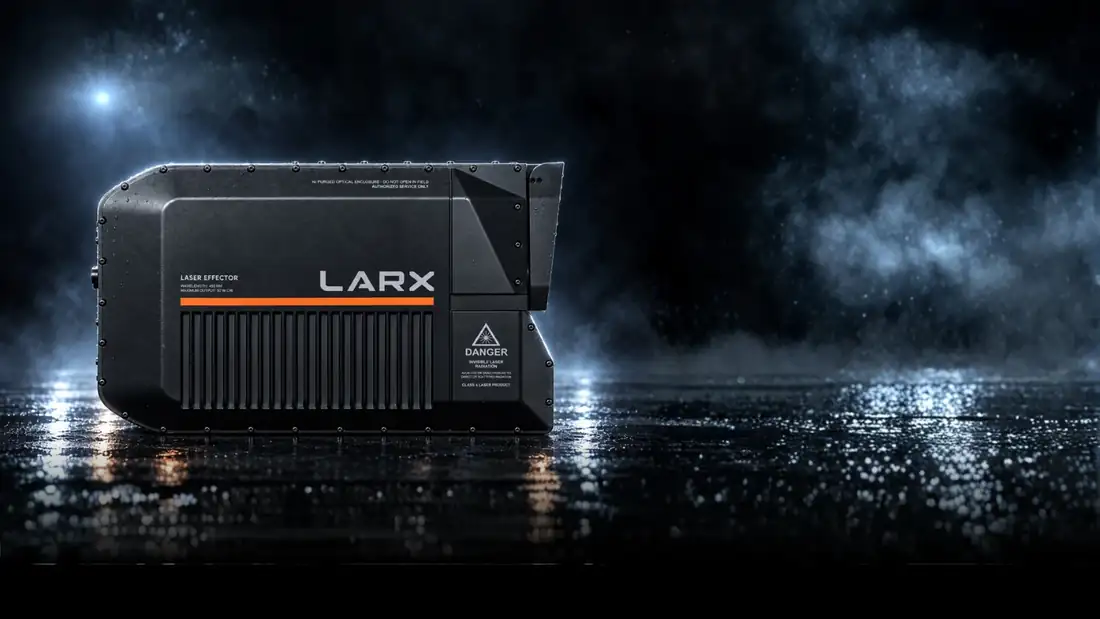
LARX is a 3 kW high-energy laser effector developed by Fergus Engineering. It is designed to mount on existing counter-UAS platforms and to work with an operator's own detection, tracking and command systems rather than replace them.
LARX defeats small (Class 1) drones, either by damaging critical components (hard kill) or by over-illuminating onboard cameras (dazzle). It is built from industrial-grade components in a modular architecture that scales from fixed sites to mobile installations.
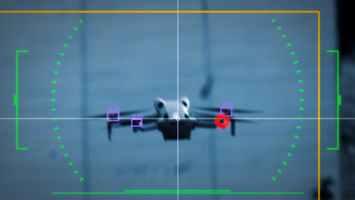
CueThe host counter-UAS system detects a threat and cues the effector.
EngageThe effector directs and holds the laser beam on the target.
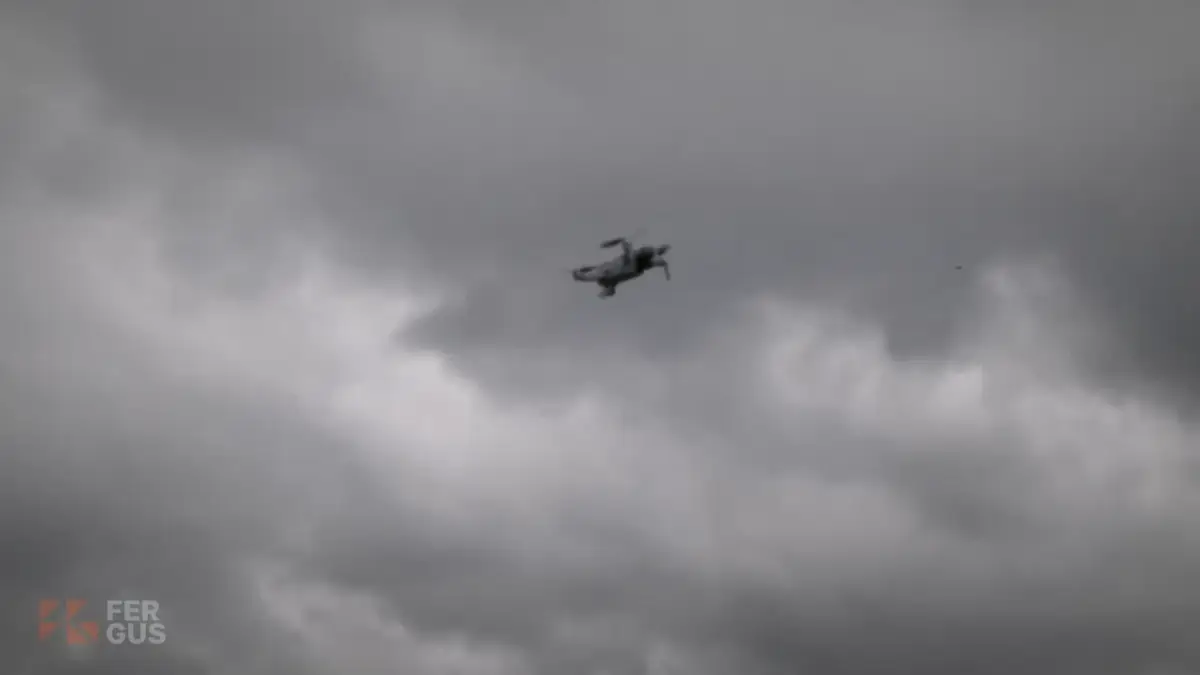
AssessThe effect is assessed before the next engagement.
Stills from Fergus Engineering demonstration footage.
Demonstration footage: Fergus Engineering.
Detailed technical information is available to qualified organizations on request.
LARX laser effector. Image: Fergus Engineering.
05 · THE ORGANIZATIONS
Complementary roles.
Fergus Engineering
Viersel, Belgium · Technology developer
An engineering company founded in 2024 by an engineer with more than a decade of R&D management experience in the laser-cleaning industry. Fergus Engineering provides product development, laser-application engineering and engineering consultancy, with a focus on the defence and security sector, and is the developer of the LARX laser effector.
A Canadian supplier of industrial laser-cleaning systems. Laserverse sells, integrates and supports high-power (Class 4) laser equipment for industrial customers, and provides operator training, laser-safety equipment, process development and field service.
The defence technology division of Laserverse, established to pursue directed-energy defence technology in Canada. Laserverse Defence is working with Fergus Engineering on the testing, validation, environmental hardening and Canadian production of LARX. Any manufacturing, licensing or supply arrangements remain subject to agreement.
06 · THE CANADIAN OPPORTUNITY
Taking LARX further, from Canada.
Laserverse Defence will help take LARX further: extending its reach through testing and validation, hardening it for Canadian climates and then for deployment abroad, and scaling production with key Canadian partners, including established manufacturers among Laserverse’s existing customers.
01
Test and validation
Structured testing and validation to extend the distances at which LARX can engage.
02
Environmental hardening
Hardening the system for Canadian climates, from extreme cold, snow and ice to wide temperature swings, and then for deployment abroad.
03
Scaling production
Building a Canadian production base with key industrial partners able to manufacture and engineer at scale.
04
Integration and support
Integration with Canadian platforms and command systems, backed by Laserverse’s laser-safety, operator-training and field-service experience.
Timelines depend on testing, partner agreements and applicable Canadian requirements, including laser-safety, airspace and controlled-goods regulations.
07 · NEXT STEP
Talk to Laserverse Defence.
We welcome discussions with Canadian defence and security organizations, government departments, platform integrators, industrial partners and critical-infrastructure operators.
Detailed technical information is available to qualified organizations, subject to appropriate agreements.
 Cue
 Engage
 Assess